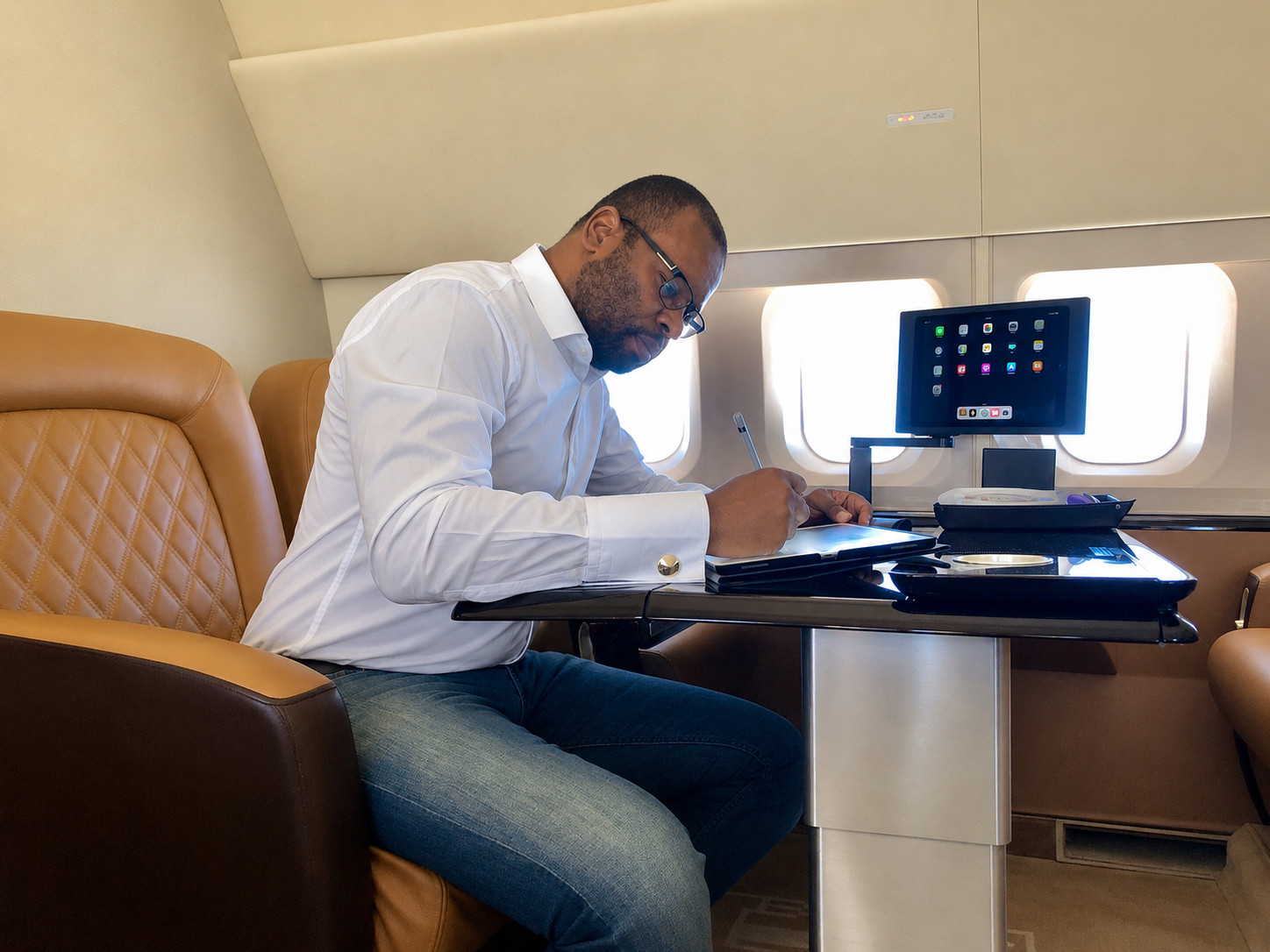
For decades, luxury design followed a familiar formula. Minimalist interiors, flawless finishes and globally recognisable aesthetics became the visual language of wealth, whether aboard a private jet, superyacht or penthouse.
But according to industrial designer and entrepreneur Edése Doret, that era is coming to an end.
After more than 30 years designing bespoke interiors for private aircraft, yachts and ultra-high-net-worth clients around the world, Doret believes the next chapter of luxury is no longer about creating spaces that look expensive, it’s about creating spaces that feel deeply personal.
“The world’s wealthiest clients aren’t looking to own what everyone else has,” he says.
“They’re looking for something that reflects who they are, where they’ve come from and the story they want to tell.”
It’s a philosophy that has seen the New York-based founder build a career at the intersection of engineering, craftsmanship and cultural storytelling. His clients have included private aviation operators, government aircraft and royal households, with projects requiring not only exceptional design but an understanding of complex engineering, aviation regulations and the expectations of some of the world’s most discerning customers.
Yet Doret believes the biggest shift isn’t in design… it’s in consumer behaviour.
“Luxury used to be about aspiration. Today it’s about authenticity,” he says. “Clients want meaning. They want craftsmanship. They want experiences that can’t be copied. This individualisation now sits at the heart of the creative process when responding to the needs of discerning individuals seeking statement pieces that speak to their own values, beliefs and outlook on the world.”
That thinking increasingly extends beyond aviation.
For a recent project in Abu Dhabi, Doret immersed himself in the city’s architectural heritage, visiting the Louvre Abu Dhabi and Qasr Al Hosn before beginning the design process. Rather than borrowing decorative motifs, he sought to understand the materials, history and cultural identity that shaped the region, translating those influences into a contemporary interior.
It’s an approach he believes more businesses, not just luxury brands, should be paying attention to.
“As markets become more competitive, products alone are no longer enough,” he says. “Whether you’re selling a luxury interior, a hotel experience or a premium consumer product, people are looking for businesses that understand them on a deeper level.”
That shift has implications well beyond the design industry.
Across sectors, brands are investing more heavily in personalisation, experience, and emotional connection as affluent consumers become increasingly selective about where they spend their money. For founders and business leaders, Doret argues, differentiation is no longer achieved simply through price or exclusivity, but through creating products and experiences with genuine meaning.
It’s also informing the next phase of his own business. Later this year, Doret will expand his design practice with a limited collection of bespoke furniture, bringing the same philosophy of craftsmanship, narrative, and cultural influence into collectible pieces for the home.
And if he’s right, the businesses defining the next generation of premium brands won’t simply be selling beautiful products, they’ll be creating lasting emotional connections.