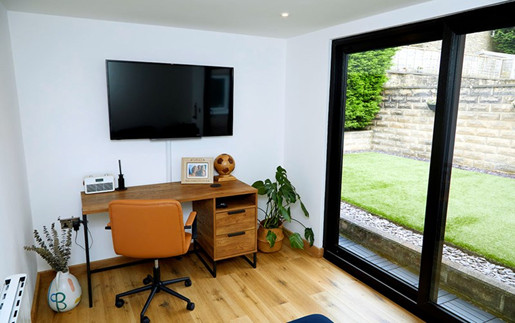
WFH employees waste 5+ hours each week due to distractions, new research has revealed.
With millions of us either homeworking full-time or utilising hybrid working setups, modular garden room specialists Make Room Outside commissioned a national survey to uncover the biggest distractions that people most commonly face when working from home.
According to the findings, the majority (84%) of those surveyed were regularly distracted from productive work when WFH – at an average of 63 minutes and 17 seconds in a normal WFH day.
When asked which scenarios they found most distracting when WFH, the list (ordered from most common to least common) included:
- Social media scrolling (30%)
- Non-work-related messaging apps – such as WhatsApp, Facebook messenger etc. (27%)
- Browsing news websites (24%)
- Being interrupted by children (23%)
- Being interrupted by partner (21%)
- Watching television or streaming videos (18%)
- Receiving deliveries – such as from the postman or a courier (17%)
- Being interrupted by pets (16%)
- Doing laundry (13%)
- Cooking and tidying or cleaning (both 13%)
- Unexpected visitors (12%)
- Procrastinating (11%)
- Online shopping (9%)
- Running personal errands (9%)
- External noise – e.g. road, neighbours, pedestrians (8%)
- Caregiving responsibilities (8%)
- Daydreaming (7%)
- Pain/discomfort due to poor seating choice (7%)
- Being interrupted by a parent (6%)
- Pain/discomfort due to improper desk set up (6%)
- Having sex (4%)
- Other distraction (1%)
Ryan Crossley, director at Make Room Outside commented: “Many of our survey respondents are regularly distracted when working from home, with digital distractions, family commitments, chores, procrastination, and even pain all being common culprits. But for many of our survey respondents, our environment when WFH can make a big difference to how susceptible we are to distractions…
“Our survey also highlighted that the majority (77%) of the respondents do have a designated workplace in their home for WFH days – BUT only 47% have a separate room or space that offers a clear boundary between work and home life. More than 90% of those without a separate space were regularly distracted when WFH, but this drops to 79% for those with a designated separate space, and further to 73% for those who used external spaces such as co-working or public cafes.
“However, there are numerous examples which might mean that it is not practical for someone to leave their home to utilize an external space – for example, high call frequency, unusual shift patterns, or financial restrictions for this additional expense.”
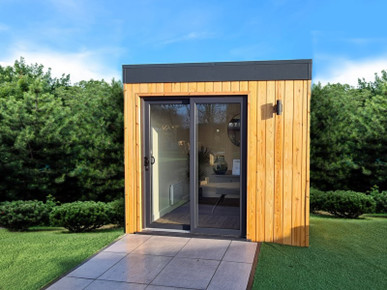
Image credit: Make Room Outside
Make Room Outside also collaborated with experts to give further insights and advice into how we can become more productive on WFH days. Dr Bradley Powell, a chartered clinical psychologist verified on the healthcare platform Doctify shared that “productivity at home begins with the signals we give the brain. Many people tell me they stay in pyjamas, skip showering, and start work from the sofa, which subtly communicates rest rather than focus. Creating a clear psychological shift into ‘work mode’ can make a significant difference…
“Simple steps such as getting dressed, preparing a tidy and distraction-free workspace, and beginning the day with a short walk or exercise help the brain recognise that the working day has started. Environment also matters – using a consistent desk or chair helps create a mental association with concentration instead.”
Crossley added: “If you’re struggling for space, peace and quiet when working from home, or your work regime is affecting your work-life balance, then a fully insulated garden room (complete with all the necessary services, from power and heat to wifi) could be the perfect solution to match your working requirements. Potential benefits of using a garden room to create an office include having a strong separation between work and home life, providing a quieter and more focused space, protecting boundaries, and adding the feeling of ‘going to work’. Plus, it’s also a great investment for the future as it’s likely to increase the value of your property.”
For more information, visit: https://www.makeroomoutside.co.uk/news-media/tips-on-avoiding-common-distractions-when-wfh/
Image credits: Make Room Outside