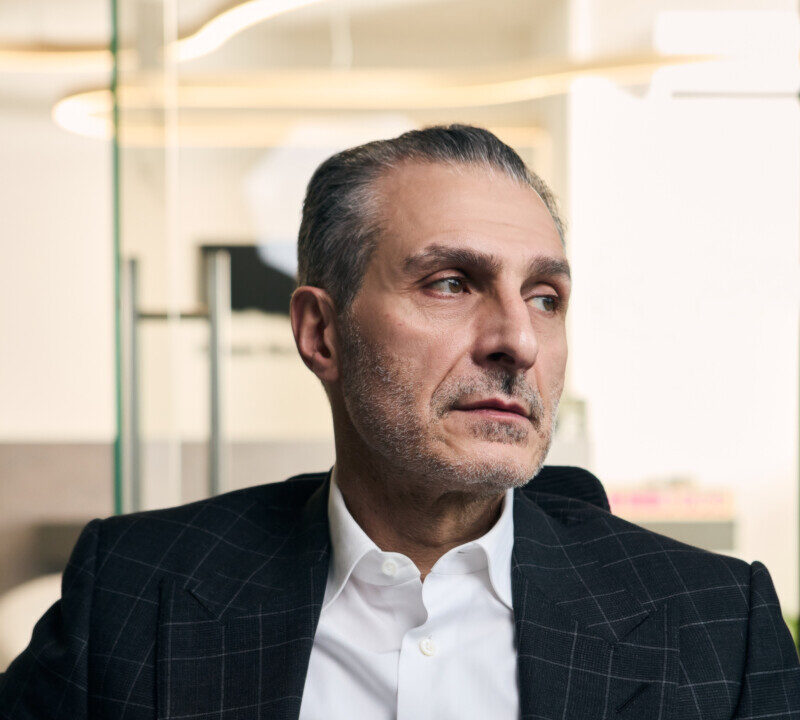
By Vazgen Gevorkyan, Industrialist, Member of the Supervisory Board at Evocabank, Strategic Advisor to Keron Development Foundation, Green Rock Foundation, and Wilco Wealth Management
Every year, business owners spend the first quarter doing the same thing: refining the plan. Reviewing the vision. Aligning the roadmap. And then wondering, somewhere around March, why nothing has actually moved.
I have built businesses across infrastructure, digital banking, and hospitality. I have invested capital across different markets and different economic cycles. And the pattern I keep seeing, in boardrooms and in small offices alike, is that the more time people spend on strategy, the less time they spend on the work that actually produces results. Thinking matters. So does knowing when to stop thinking and start building.
When I took responsibility for transforming Evocabank into Armenia’s first fully mobile-first bank, the instinct might have been to spend months on frameworks and planning documents. Instead, we set one clear direction: mobile-first, integrated, built for real users, and started executing. The team owned the delivery. The results followed. The strategy was a decision, and then a series of actions, not a document.
That distinction carries more weight in 2026 than it has in years.
The environment has shifted faster than most operators anticipated. Capital has no loyalty to geography. Money moves to wherever conditions are most favourable, and it moves quickly. Businesses that assume their financing relationships, their banking partners, or their customer base are fixed assets will discover, sometimes suddenly, that nothing is fixed. Being ready to adapt is part of running a business now.
The same dynamic is playing out in financial services, with implications for every business owner who banks, borrows, or takes payments. Fintech companies operating without banking licences are hitting a ceiling. They can move fast, but they cannot hold deposits, cannot issue credit at scale, and cannot build the institutional trust that serious business relationships require. Meanwhile, traditional banks that have failed to build genuine digital capabilities are losing ground steadily. The model of managing compliance with enormous back-office teams, running processes that modern fintech handles with a fraction of the people, has a limited runway. This convergence will reshape the entire financial ecosystem, including for the businesses that depend on it. Operators watching this shift and preparing will have options. The ones who are not will find themselves reactive when those options narrow.
None of that preparation requires a new strategy document. It requires decisions, followed by action.
The businesses I respect most, and the ones that have consistently outperformed across the cycles I have seen, are the ones where the owner knows when to stop managing and start trusting. Where the person at the top has set clear standards and then genuinely let capable people execute. For entrepreneurs who built something from the ground up and are used to controlling every part of it, this is harder than it sounds.
There is a version of delegation that looks right but functions as deferred control: approving every step, second-guessing every hire, staying involved in decisions that should have been resolved two levels down. That keeps the business dependent on one person and creates a ceiling the organisation can never get past.
Real delegation means giving someone full responsibility and leaving them to carry it, unless the fundamentals are genuinely at risk. It feels uncomfortable at first. Most of the time, that discomfort is useful: it shows you where you have been confusing personal involvement with actual impact.
The businesses I have seen scale well are the ones where the founder’s energy concentrates on the decisions only they can make. Financing. Positioning. Major hires. Long-term direction. Everything else runs through people who own their domains, and the rest is process. Process can be built and handed over.
2026 is rewarding operators who move. The conditions are shifting: capital is mobile, financial infrastructure is being rebuilt, markets are adjusting to new pressures. These are not circumstances to wait out. They are the environment in which business now operates, and the advantage goes to the people who have made their decisions, trusted the right people, and focused their energy on execution.
The plan is not what separates the businesses that grow from the ones that stall. The willingness to act on it is.