By 31 January 2027, the UK’s copper phone network will be switched off permanently. Despite the delayed deadline, time is short. For businesses still relying on legacy infrastructure, the switch off is no longer theoretical – it’s operational. This article shares why businesses must act now ahead of the PSTN switch off.
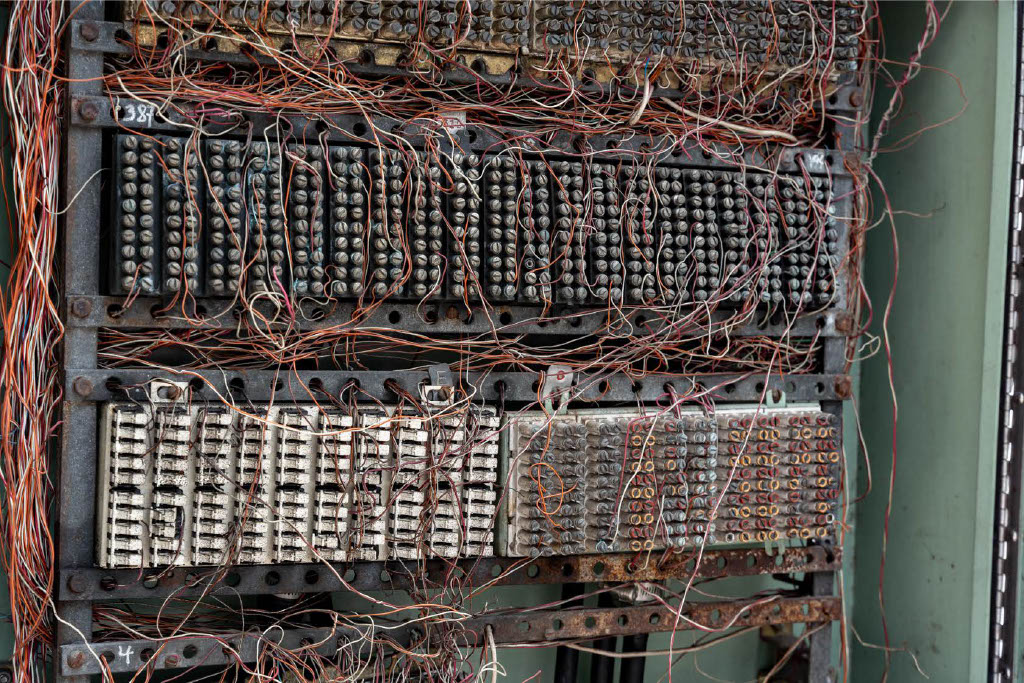
For many organisations, that deadline still feels distant. But across the UK, engineers have already begun dismantling the old copper network inside local telephone lines. Openreach has warned that more than 500,000 UK business lines are still operating on legacy copper infrastructure. These cables have carried Britain’s communications for over a century and are now being replaced with fibre. This is not a future upgrade. It is happening now.
Digital network business Openreach is investing £15 billion to extend full fibre broadband to 25 million premises, making the UK one of Europe’s fastest growing fibre markets. Around 80 per cent of homes and businesses will soon have access to full fibre broadband. This is significant and long overdue, but infrastructure alone will not guarantee business stability.
Director of all IP at Openreach, James Lilley, said this about the PSTN switch off: “The digital world won’t wait for those that stall. Every day of delay risks disruptions, higher costs, and missed opportunities.” Lilley references the risks organisations are facing by delaying their move from analogue networks to digital infrastructure. Many businesses still treat fibre migration as an optional upgrade as opposed to a mandatory transition with a fixed deadline.
Despite this definitive deadline, adoption remains slow. The Financial Times recently reported that only 38 per cent of homes and businesses that can connect to full fibre through Openreach have done so. Fibre may be available in many areas, but operational readiness is another matter entirely. This is no longer an IT upgrade, it is a business continuity decision.
Part of the issue is confusion. Some organisations believe that because they have fibre broadband, they are prepared. But fibre to the cabinet (FTTC) still relies partly on copper. Full fibre to the premises (FTTP) is different, as it shifts away from using copper entirely. FTTP also provides a significantly faster, more reliable and consistent internet connectivity compared to FTTC by using fibre optic cables directly into the home.
Across the UK, businesses continue to rely on systems designed for analogue lines: alarm systems, lift emergency phones, EPOS machines, door entry systems and older business telephone systems. Many have never been reviewed in the context of a copper switch-off. A lift emergency phone that fails during a power outage is not a technical inconvenience. It is a liability.
Without proper planning, the impact that businesses could face would go beyond a minor disruption. Payment processing could stop; safety systems could be compromised; customer communication could be interrupted. Just because fibre is available locally does not mean a business is operationally prepared to make the switch.
That is why the transition demands more than a last-minute installation. It requires proactive auditing, a clear understanding of where copper still exists within operations, verification of broadband capacity for VoIP services and identification of incompatible hardware. It also means building resilience through measures such as backup connectivity and power protection.
Handled strategically, however, the switch is an opportunity. Full fibre offers greater reliability, higher performance and the stable foundation modern organisations need for cloud platforms, unified communications and digital collaboration. Once in place, it is infrastructure designed to support growth for decades.
The UK’s fibre rollout is significant progress, but it is only half the task. Full fibre is not a lifestyle upgrade – it is a structural requirement with a fixed, imminent deadline. Businesses that prepare now can treat it as an investment in resilience. Those that delay may find themselves forced into rushed decisions under pressure. The deadline is fixed; the choice is not.