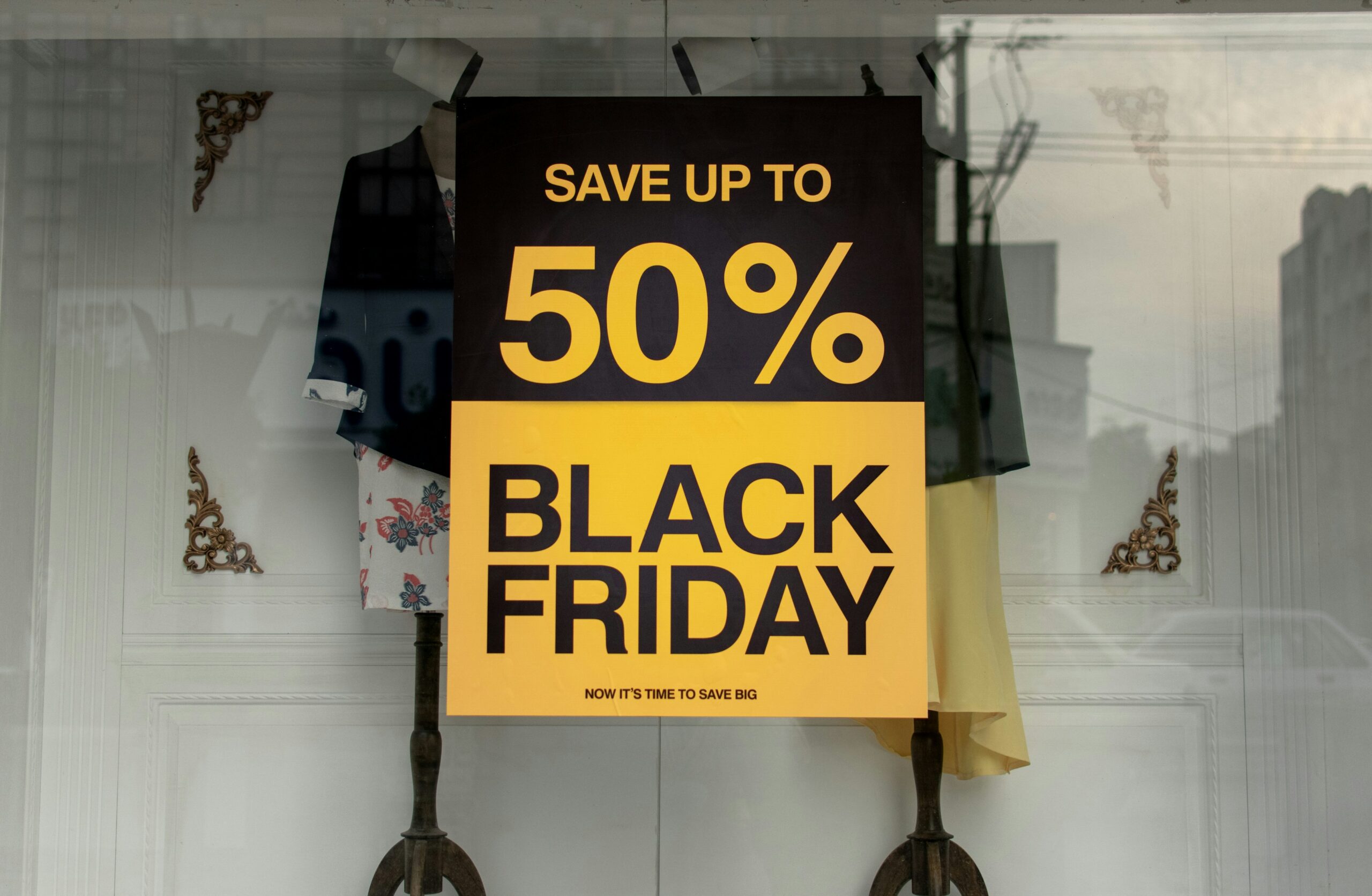
Black Friday might still be the biggest moment in retail, but shoppers no longer treat it as a one-day event.
New research from Experian and Reward revealed that 2025’s “Golden Quarter” is no longer defined by a single weekend of sales, but instead by a month-long period of sustained and value-driven shopping.
For retailers, that shift means that every visit and every single metre of floor space matters more than ever before. With consumer attention now spread across weeks rather than hours, point-of-sale (POS) displays are emerging as one of the most effective ways to keep shoppers engaged and spending.
According to Daniel Southern, Managing Director at Luminati, one of the UK’s leading designers and manufacturers of creative display solutions, Black Friday has evolved from a single day into more of a mindset.
“Although customers are being more selective about how they spend, that doesn’t always mean they’re spending less,” Southern says. “It just means that stores have to work harder to make each moment in the customer journey count.”
Why Black Friday is no longer just a weekend event
Experian and Reward’s analysis, based on over 1.4 billion retail transactions, found that overall spending during the broader trading window grew by more than 10% year-on-year, while October and December both outperformed November in terms of sales.
It’s a sign that consumer habits are becoming more deliberate and evenly paced, with shoppers looking for more consistent value and better experiences over time, rather than rushing in for a single day or one weekend of deals.
“Retailers can’t rely on a single weekend anymore and so displays and layouts need to be flexible enough to evolve across the whole season,” Southern adds. “The stores that keep their environments fresh will be the ones that find customers coming back.”
Cutting through the chaos
On busy shopping days, attention spans shrink. Aisles are crowded, signage competes for visibility, and the checkout becomes the main spot for driving impulse purchases.
Effective POS design turns those high-traffic moments into conversion opportunities. Countertop product displays and free-standing shelving allow for stores to guide flow while keeping add-on products in view, while lighting and motion can help too. A subtle illuminated plinth or a digital screen draws the eye without adding clutter, while clear messaging helps shoppers to make fast decisions.
“The goal isn’t to overwhelm people with choice,” Southern comments. “It’s about simplicity and relevance. A well-designed display should feel effortless, catch attention, communicate value instantly, and most importantly, not slow the customer down.”
Value-led retail reshapes the checkout
Experian’s findings show that value and wellbeing are driving forces behind this year’s spending. Health and beauty, fitness, and nutrition sales continue to climb, while value-driven retail has grown by 42% compared to 2023.
That consumer mindset has real implications for in-store merchandising. Shoppers may be cautious, but they still respond to products that feel practical, thoughtful, or self-rewarding.
“Customers want to feel good about spending,” says Southern. “The right product at the right moment is what drives that extra, unplanned purchase, and so retailers need to focus on products that feel useful, affordable or giftable when planning their POS strategy.”
A cost-effective and season-long advantage
As the Black Friday period stretches further into the Golden Quarter, retailers that invest in flexible, modular displays are gaining a lasting advantage. Displays that can be repurposed for Christmas, Boxing Day, or even January sales extend their value far beyond one weekend, reducing both cost and waste.
“Retail design used to be about single moments, but now it’s about adaptability,” Southern adds. “When you can change a display overnight and it still looks fresh, you’re not just reacting to demand, but you’re leading it.”
This adaptability is even more important as footfall in physical retail continues to rise. Data from RetailNext shows that on Black Friday 2024, in-store visits across the UK rose by more than 40% week-on-week, with London seeing a 45% increase compared to the previous week. With more shoppers returning to stores, even small improvements to checkout design can translate into meaningful sales gains, particularly when well-placed displays can lift featured product sales by 10 to 30%.
POS displays are a relatively low-cost investment compared to large-scale seasonal refits or digital signage, yet they deliver immediate, measurable returns. A single well-positioned counter display can often pay for itself within the first week of deployment through incremental sales.
Reusable units also reduce the need for one-off promotional materials, lowering both production costs and environmental impact.
“From a cost perspective, displays are one of the most efficient tools that retailers have,” says Southern. “They’re simple to update, easy to reposition, and don’t require heavy infrastructure changes. In a retail environment where margins are tight, that kind of flexibility really matters.”
Turning traffic into loyalty
Black Friday may still bring the crowds, but its role has certainly changed. The real opportunity now lies in sustaining engagement across the full festive period, converting attention into spend, and first-time visits into loyalty.
And while it might not make the headlines like deep discounts, point-of-sale remains one of retail’s most overlooked drivers of sales. It’s the final touchpoint where brands can turn browsing into buying and transactions into trust, and so must be considered a vital part of any retailing strategy.
“Every customer journey ends somewhere,” Southern concludes. “If you make that final moment inspiring, efficient and personal, you’ve not just won a sale, but you’ve also earned a reason for them to come back.”