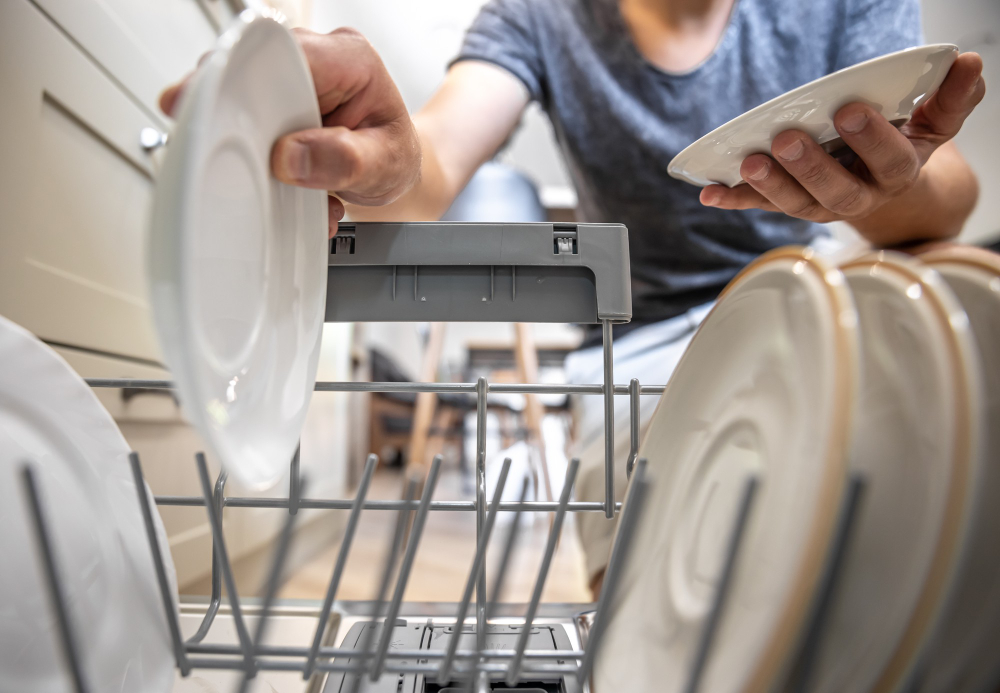
A dishwasher is one of the most important appliances in your home. It makes the everyday dishwashing chore easy and efficient, all while saving you time. But are you using it correctly? You might be making several mistakes using your dishwasher that reduce efficiency, waste water, and even shorten its lifespan. By following a few simple steps, you can get the best performance from your machine while also being eco-friendly.
Here are five essential tips to help you use your dishwasher the right way.
1. Avoid Pre-rinsing Your Dishes
It might seem logical to rinse off your dishes before placing them in the dishwasher, but modern dishwashers are designed to handle food residue efficiently. Pre-rinsing is not only unnecessary but also wasteful.
Here’s Why You Should Avoid Pre-Rinsing:
Saves Water and Time:
Dishwashers use powerful jets of water and detergent to break down food particles. If you rinse beforehand, you’re wasting litres of water unnecessarily.
Better Cleaning Efficiency:
Detergents work best when they have something to cling to. Completely rinsing off food debris can make detergent less effective.
Designed for Dirty Dishes:
Today’s appliances like Toshiba dishwashers are programmed to adjust their cleaning cycles based on how dirty your dishes are. If you pre-rinse everything, the machine may detect it as slightly soiled and run a shorter, less intense cycle. This can result in subpar cleaning.
So, instead of wasting time and effort rinsing, simply scrape off large food particles (as you don’t want them clogged and blocking the spray jets!) into the bin and let your dishwasher do the rest!
2. Use the Right Detergent at the Right Amount
Not all detergents are created equal, and using the wrong type can lead to streaky, poorly cleaned dishes or even damage to your machine over time.
Choosing the Right Detergent:
Tablets or Pods:
These are pre-measured and convenient but may not dissolve properly in short cycles.
Powder:
You are in control of how much detergent you want to use, making it a good choice for varying load sizes.
Liquid or Gel:
Works well for standard cleaning but may not be as powerful as powder or pods for tough stains.
How Much Detergent to Use:
- Always follow the manufacturer’s recommendations to suit your dishwasher model.
- Avoid overfilling the dispenser as too much detergent can leave a soapy residue.
- If you have hard water, consider using a rinse aid to prevent mineral buildup and water spots on glassware.
3. Load the Dishwasher Correctly
The way you load your dishwasher plays a huge role in how effectively it cleans. An overloaded machine or a poorly loaded one can result in dirty dishes, inefficient water flow, and even damage to delicate items. Also, make sure all the dishes you put into a dishwasher are dishwasher safe.
Top Rack:
- Place items like glasses, mugs, and small bowls upside down to allow water to reach every surface.
- Avoid crowding items too closely together as water needs space to circulate.
Bottom Rack:
- Load plates facing the centre (the dirtier side of the utensil should face the machine’s centre), as this ensures the best exposure to water jets.
- Place larger items like pots and pans on the sides or at the back to avoid blocking the spray arms.
Utensil Basket:
- Mix up utensils to prevent them from nesting together, which can block water and detergent from reaching every surface.
- Sharp knives should be placed blade-down for safety.
A properly loaded dishwasher ensures that everything comes out clean without needing a second wash.
4. Select the Right Wash Cycle
Your dishwasher likely has several cycle options, but not all are needed for every load. In fact, choosing the right cycle can improve their cleaning efficiency and save energy. This depends on the size of your load and how dirty your dishes are.
Common Wash Cycles and When to Use Them:
Normal Cycle:
Best for everyday dishes with light to moderate food residue.
Heavy Duty:
Ideal for pots, pans, and heavily soiled dishes, using more water and higher temperatures.
Eco Mode:
Uses less water and energy but may take longer to complete.
Quick Wash:
This is a short cycle for lightly soiled dishes but is not recommended for greasy or heavily stained items.
Using the correct cycle not only ensures spotless dishes but also helps conserve water and electricity.
5. Do Regular Maintenance
Like any other appliance, a dishwasher requires regular maintenance to keep it running efficiently. Neglecting simple upkeep tasks can lead to unpleasant odours, clogged filters, and even machine breakdowns.
Maintenance Tips:
Clean the Filter Regularly:
Food particles and grease can build up in the filter, reducing efficiency. Remove and rinse it under warm water every couple of weeks.
Inspect Spray Arms:
Your dishes won’t get properly cleaned if the water jets are clogged. Use a toothpick to clear any blockages in the spray holes.
Wipe Down Seals and Edges:
Grease and food residue can gather around the door seals, leading to odours and leaks. Wipe them down with a damp cloth and mild detergent.
Run a Cleaning Cycle:
Once a month, run an empty cycle with a dishwasher cleaner or a cup of white vinegar to remove limescale and grease buildup.
Final Thoughts
A dishwasher is a fantastic appliance, but using it incorrectly can lead to wasted energy, higher water bills, and dishes that aren’t as clean as they should be. By following these five tips you can ensure your dishwasher works efficiently for years to come.
So, the next time you run a load, remember to follow these simple yet effective strategies. Your dishwasher (and your wallet) will thank you!