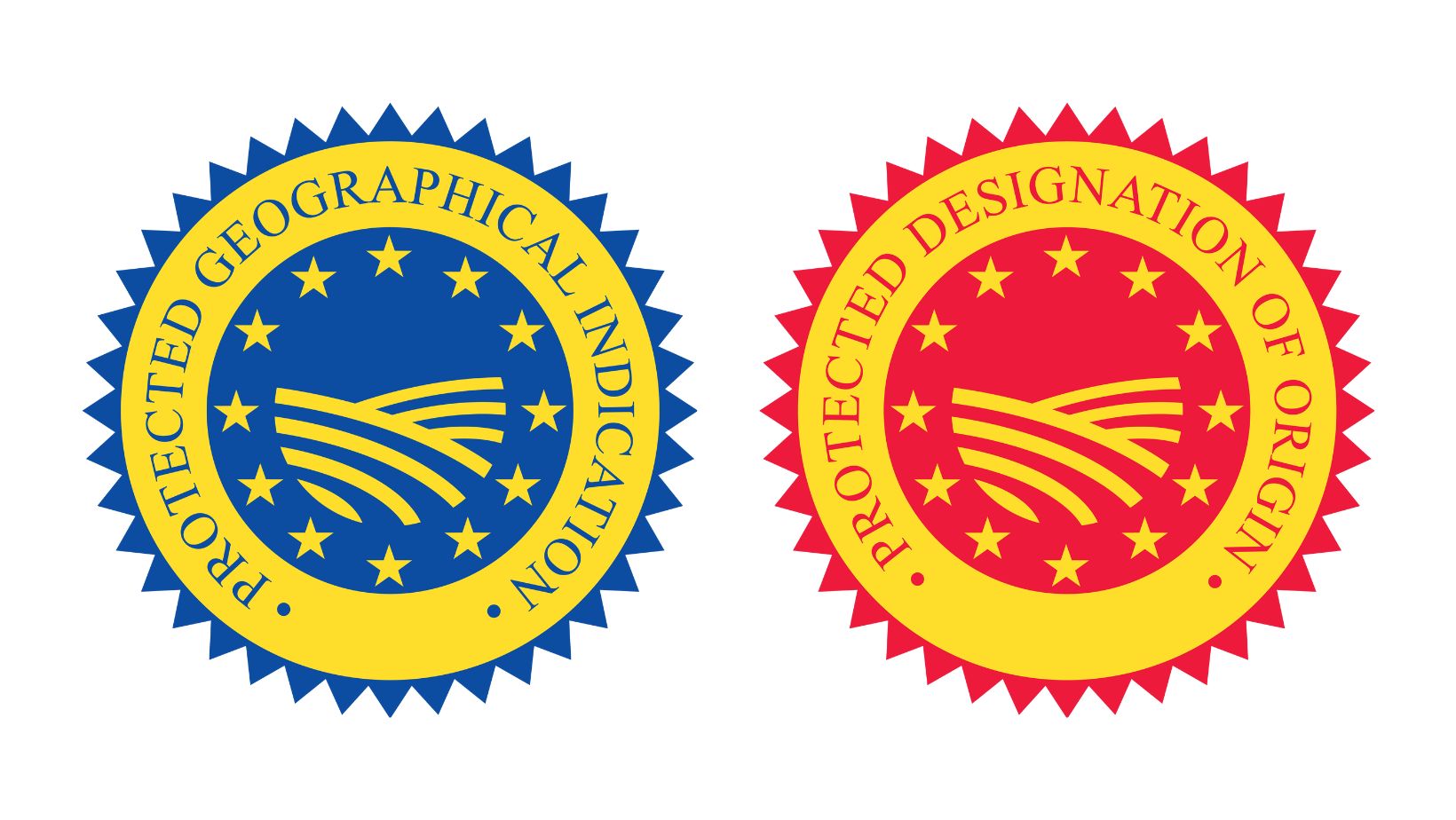
As consumers seek authenticity from their food purchases, European Union (EU) quality schemes provide the assurance that enables retailers and wholesalers to show their customers that the product has the desired characteristics and provenance. These schemes, which launched more than 30 years ago, benefit the consumer and protect the long-held knowledge and skills of producers.
For products registered as Protected Designation of Origin (PDO), every part of the production, processing and preparation process must take place in the specific region. For wines, this means that the grapes must come exclusively from the geographical area where the wine is made, such as Tokaj / Tokaji PDO from Hungary. Products across a range of food and drink categories carry the PDO label, including: Stupavské zelé PDO – a fermented cabbage from Slovakia, Gailtaler Almkäse PDO cheese from Austria, Tomataki Santorinis PDO (Santorini tomatoes) from Greece, and Grana Padano PDO from Italy.
Protected Geographical Indications (PGI) emphasise the relationship between the specific geographic region and the name of the product. To be registered as PGI at least one stage of production, processing or preparation must take place in the region. In the case of wine, this means that at least 85% of the grapes used must come exclusively from the geographical area where the wine is produced, as is the case with Χανιά PGI from Chania in Greece. PGI products even include boiled sweets such as France’s Bergamote de Nancy PGI and spirits such as Borzag pálinka PGI, a brandy made from elderberries in Hungary. Fruit and vegetables include Abensberger Spargel PGI, a regional German asparagus and Komiški rogač – the Croatian Carob pods.
According to cheese expert Patrick McGuigan, advisor to the EU’s ‘More Than Only Food & Drink Campaign’, “These quality schemes are of utmost importance to consumers and professionals. These labels provide an assurance of quality, authenticity, and unique characteristics that are intrinsically linked to a specific region. When you see a PDO or PGI label on a product, you know that it has been produced, processed, and prepared in a specific area and follows strict standards. This means you are not just buying a product; you are buying a piece of that region’s heritage, with its unique flavours, traditions, and know-how.
“Understanding the significance of a PDO or PDI label helps consumers understand the craftmanship that comes with a particular product. For example, Danablu (Danish Blue) PGI which is a semi-soft blue veined cheese, made from cow’s milk. The cheese belongs to the blue cheese family, however the cheese makers adopted traditional French recipes for making the cheese and replaced the goat’s milk with cow’s milk to better fit the creamy and rich consistency. The cheese matures over eight to twelve months resulting in intense, sharp, salty and slightly bitter flavours.
“These labels reinforce a strong regional identity and pride, as they highlight the unique agricultural and culinary traditions that make each region special.”
Organic certification
With the continued growth of the organic market, EU organic labelling is more important than ever. Within the EU there are strict controls in place to ensure all the high EU standards on organic production are met. To be certified, EU organic farms must adhere to strict rules, among them are the following:
- Only organic feed for farm animals
- Prohibition of Genetically Modified Organisms
- Strict limitations on the use of chemical fertilisers, herbicides and pesticides
- Prohibition of the use of hormones
- Use of antibiotics only when necessary for animal health
- Prohibition of ionising radiation
For baked items, processed meats, dairy products and wine, a product can only carry the EU Organic label if its ingredients are at least 95% organically farmed and if the other 5% meet additional strict conditions.
Steps towards sustainability
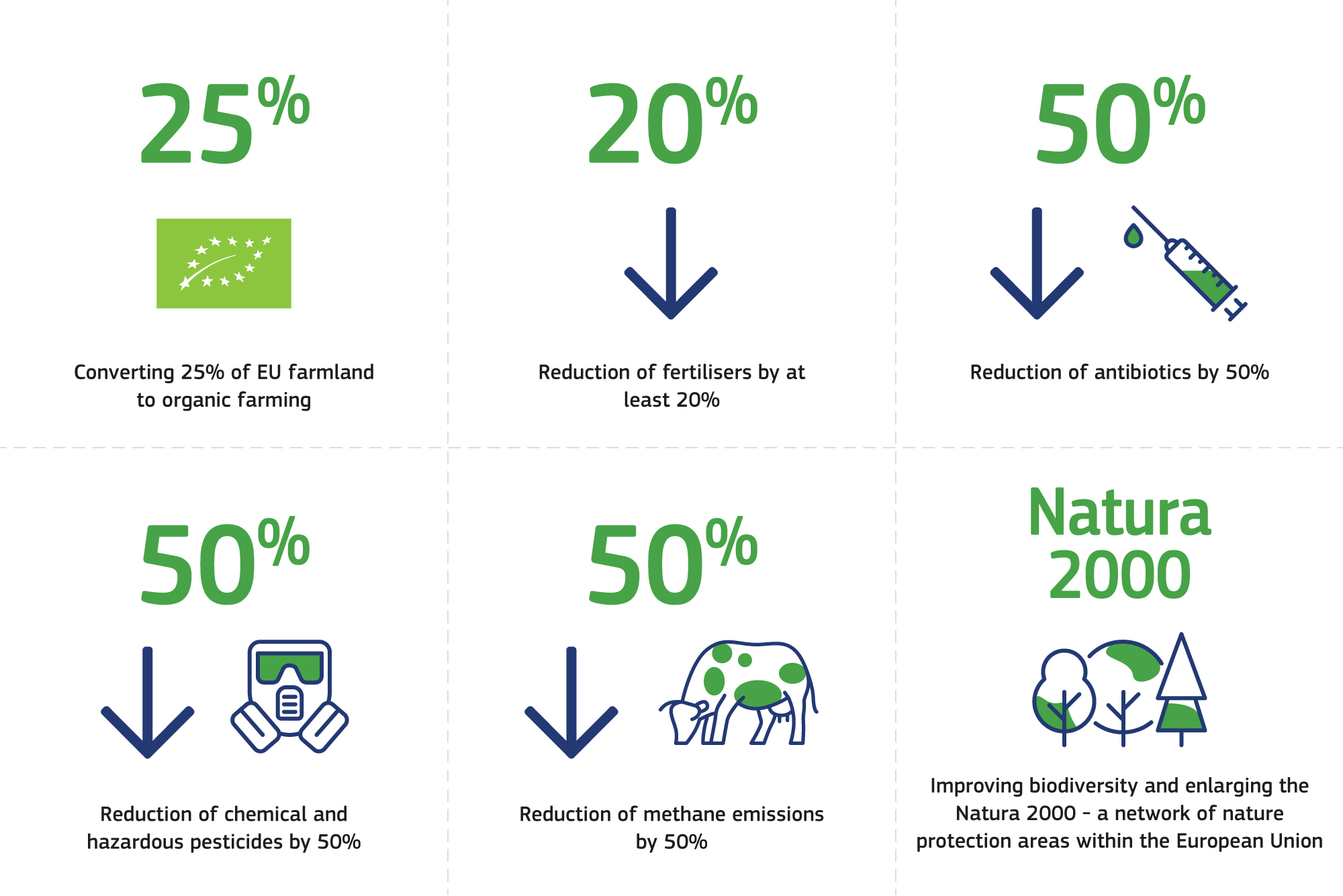
The EU Green Deal has set out sustainability targets to be met by 2023. With ambitious goals to convert farmland to organic farming, reduce the use of fertilisers, pesticides and antibiotics, lower methane emissions and improve biodiversity.
Simon Atkins, food industry expert and advisor to the EU’s ‘More Than Only Food and Drink Campaign’, said: “The EU is making significant strides in sustainable farming practices. More land across the EU is now being managed organically, marking a positive trend toward a greener future. We are seeing a growing use of regenerative farming methods, such as cover crops and companion crops. These practices not only improve soil health but also reduce the demand for chemical fertilisers, promoting a more sustainable agricultural ecosystem.
“For years, farmers have been enhancing their climate resilience, tackling major challenges head-on, and developing innovative solutions to address the climate crisis. Their ongoing commitment is driving meaningful progress across the EU. As an example, Finland has a scheme for winter cover to protect soil while Spain offers extra funding for sustainable grazing and mowing practices on pasture to reduce soil degradation and improve biodiversity. A Czech farm has created a closed-loop irrigation system, with no loss of water or fertiliser.”
Undoubtedly meeting these targets puts pressure on producers already impacted by economic challenges and extreme weather conditions. To provide a faster rollout of more sustainable practices, the EU provides grants for technology providers, researchers and farmers involved in environmental projects.
There has already been visible progress including the EU’s organic farming area which increased by 5% in 2022 and it is clear that environmental production methods appeal to consumers. Case studies exist that show that French dairy companies creating high value products from whey (a considerable by-product in the production of cheese) have been able to increase their sales through environmental claims on packaging.
For more information on EU Quality Schemes, visit: https://agriculture.ec.europa.eu/farming/geographical-indications-and-quality-schemes/geographical-indications-and-quality-schemes-explained_en
For more information on the EU organic label visit https://agriculture.ec.europa.eu/farming/organic-farming/organic-logo_en.